






SIAL Sounds the Alarm on Protein Washing
SIAL Paris is putting the protein boom under scrutiny ahead of its 17–21 October food fair. Its published trend analysis warns of “protein washing” - marketing that elevates protein content without a corresponding nutritional benefit. The message to manufacturers is clear, protein quantity alone cannot establish a product’s value; quality, digestibility and the overall food matter too.
2 minutes ago2 min read


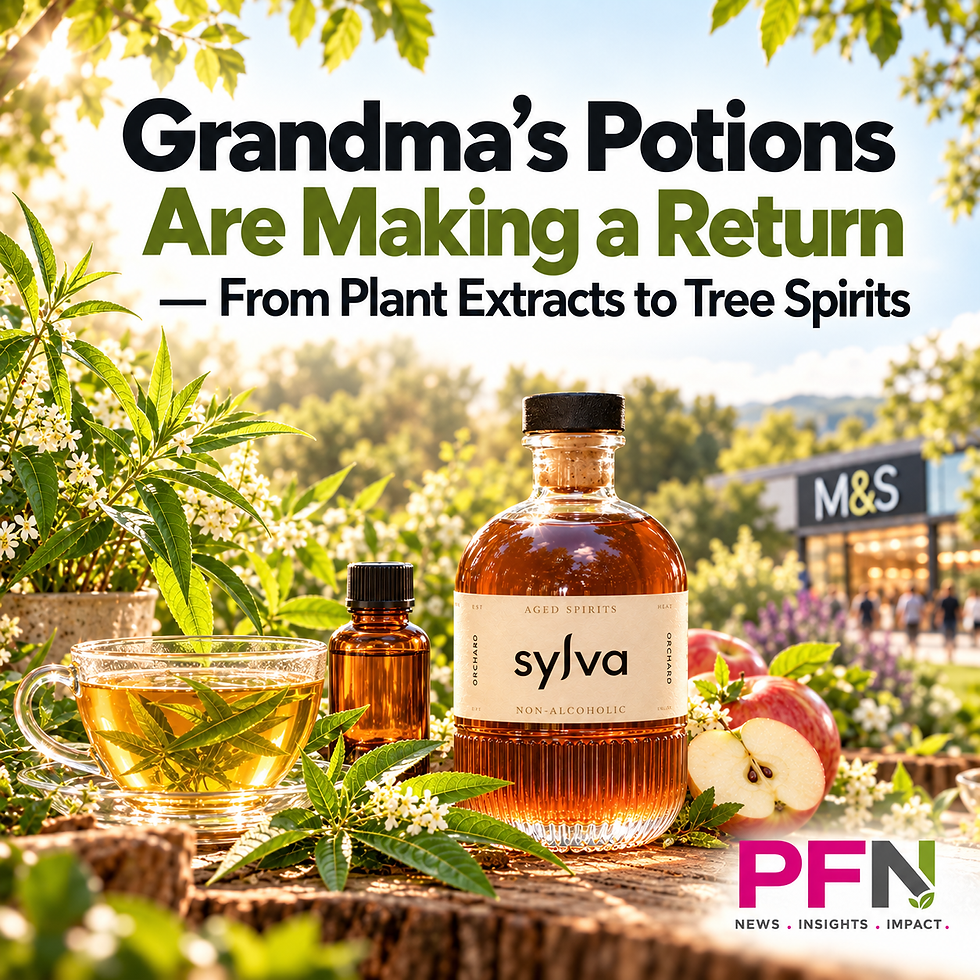
Grandma's Potions Are Making a Return - from Plant Extracts to Tree Spirits
For some of us, the scent of lemon verbena brings back a grandma's garden and her potions. Today, that familiar plant sits within a global botanical ingredients business, while orchard woods are becoming the basis of premium non-alcoholic spirits. Two recent developments suggest the garden and forest still have plenty to offer modern food and wellbeing businesses.
27 minutes ago2 min read


Beyond Meat is Moving Beyond the Meat Debate
Beyond Meat is broadening its offer from meat alternatives into everyday plant nutrition. Its brand-new "Phytosphere" portfolio brings together protein powders, savoury bars, beverages and meal products through a dedicated direct-to-consumer website. The range combines plant protein with nutrients including fibre, positioning Beyond across more eating occasions.
2 days ago3 min read


Food Biotech Is Moving Behind the Label
A new global food biotech shortlist isn't the final word on who will shape 2027, but it provides a remarkably telling picture of where food biotech is heading.
Protein Production Technology International (PPTI) has shortlisted 81 companies from 379 nominations for its eventual 27 Food-Techs to Watch in 2027. Public voting remains open until October 23, with the final 27 due to be revealed in Amsterdam in November.
So this is not yet the Top 27.
6 days ago3 min read


What If Olive Oil Didn't Have a Harvest Season?
For thousands of years, olive oil has been governed by one unavoidable constraint in the form of the harvest clock. Pick the olives, get them to the mill quickly, extract the oil and then begin the slow decline from freshly pressed oil to a product that may spend months in tanks, bottles, warehouses and retail distribution.
Sep 253 min read


Impossible Stopped Waiting for Heme And Walked Into Tesco
Impossible Foods has found a pragmatic way into one of Europe’s most important grocery markets simply by stopping to waiting for its signature heme ingredient to be approved.
Sep 242 min read


THE PROTEIN WE’VE BEEN THROWING AWAY
Every time tofu or soymilk is produced, a wet soybean pulp called okara is left behind. It still contains valuable nutrients and protein, but because it is highly perishable, fibrous and relatively unappealing in taste and texture, much of it ends up as low-value animal feed or food waste.
Sep 223 min read


Smuggled Garlic - Inside The Shadow Food Trade
Garlic may seem an unlikely window into a global shadow food trade. Yet reports of Chinese garlic being smuggled into Mexico and Peru raise a much bigger question: how much food is already moving across borders outside the systems designed to tell us where it came from?
Sep 193 min read
Comments