






Smuggled Garlic - Inside The Shadow Food Trade
Garlic may seem an unlikely window into a global shadow food trade. Yet reports of Chinese garlic being smuggled into Mexico and Peru raise a much bigger question: how much food is already moving across borders outside the systems designed to tell us where it came from?
8 minutes ago3 min read


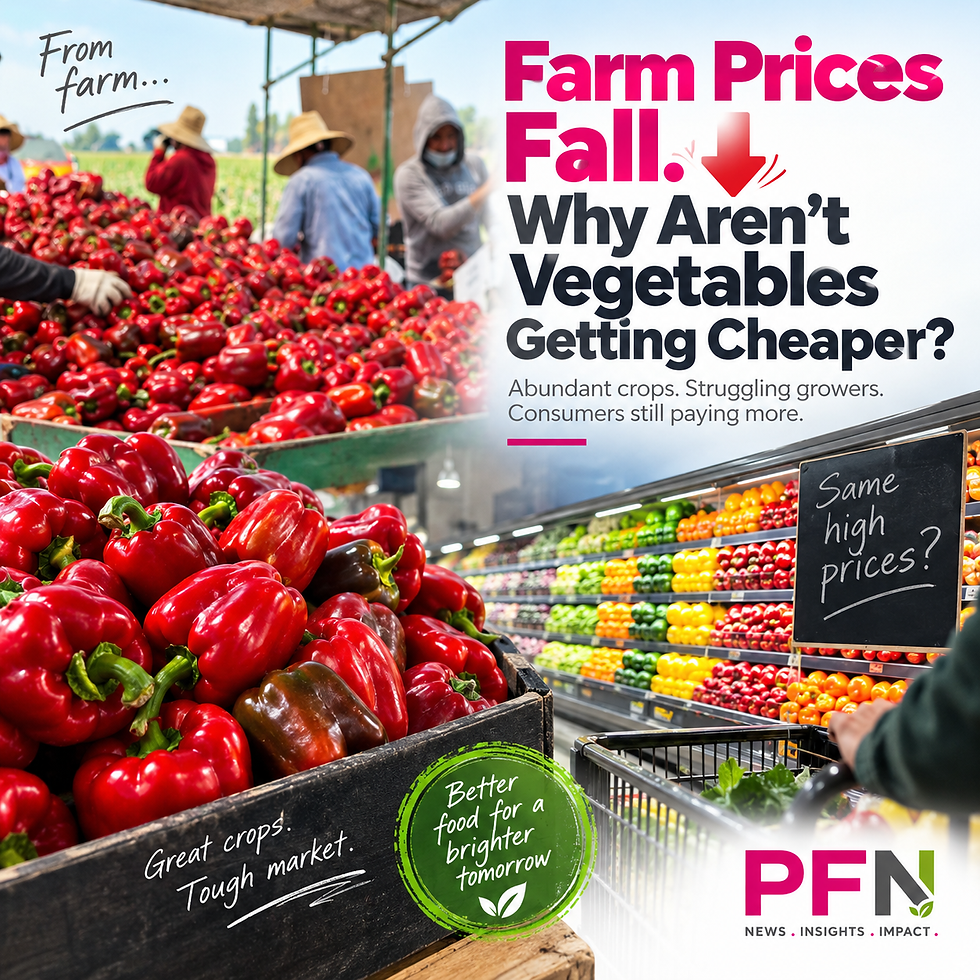
Farm Prices Fall. Why Aren’t Vegetables Getting Cheaper?
Abundant crops, struggling growers and consumers still watching every dollar are exposing a curious fault line in the fresh produce business. Why aren't vegetables getting cheaper?
1 day ago4 min read


Food Biotech’s US$75,000 Second Life
Meati lost the bathwater, but a remarkably well-priced baby has been saved providing food biotech's second life.
Somewhere amid the collapse and attempted revival of US alternative-protein company Meati Foods, a valuable piece of the food-biotech future was left behind: twelve 25,000-litre fermentation tanks, their associated seed systems and a combined 300,000 litres of production capacity.
2 days ago4 min read


Five Food Signals That Matter This Week
Food innovation is entering a more commercially disciplined phase. The strongest developments are no longer technology demonstrations or novelty launches, they involve proven manufacturing, familiar applications and clearly defined routes to market. Here are five consequential food signals from the past week
5 days ago3 min read


El Niño Is Rearranging the Global Food Map - How Should ANZ Adapt?
Peru's blueberry industry has provided an early glimpse of what the strengthening El Niño could mean for global food production. But the emerging story isn't simply one of drought, crop failures and shortages. El Niño is changing where and increasingly when food is produced. For Australia and New Zealand, that presents risks, but also opportunities.
6 days ago5 min read


Sustainability Isn’t Dying - Consumers Are Calling It Something Else
The sustainability story has changed and the food industry may be looking for it in the wrong place.
A major new Bain & Company study finds global concern about environmental sustainability has actually risen to 85% of consumers, from 79% last year. But something more significant is happening beneath that headline: consumers increasingly aren't describing the choices they make as “sustainable”. They are choosing products because they appear healthier, cleaner, more natural, m
7 days ago4 min read


When Consumers Eat Less, Every Mouthful Has to Work Harder
GLP-1 drugs may have triggered America’s protein obsession, but the greater opportunity is emerging from a more disruptive change: consumers are beginning to buy and eat less. Food companies and supermarkets must now extract greater nutritional and commercial value from every mouthful.
Sep 113 min read


From Apricot Stone to Protein- Food Waste Finds a New Life
For decades, the stone or kernel hidden inside an apricot stone has had a rather complicated reputation. Now Austrian food-tech company Revo Foods is turning this unlikely raw material into a fermented, high-protein food headed for supermarket shelves.
Sep 93 min read
Comments